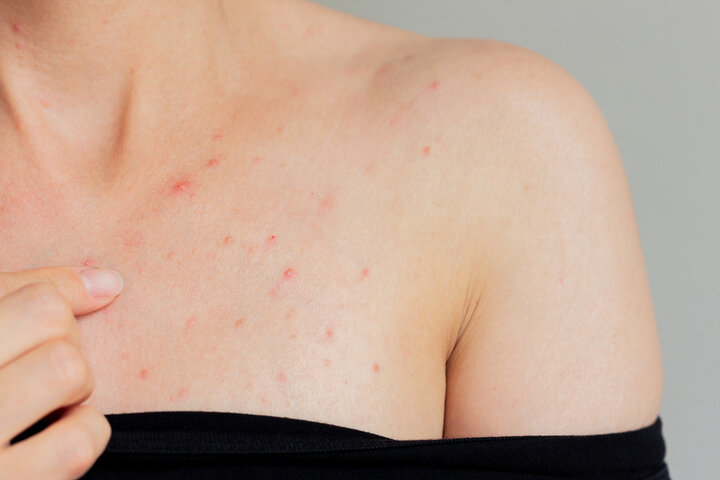

Back Acne and Chest Acne Are Not Face Acne — Here's Why That Matters …
Acne Scars vs. Dark Spots
Acne Scars vs. Dark Spots: What You’re Actually Dealing With — and How to Treat Each One
The breakout is gone. Finally. But now you’re left staring at something arguably more persistent: the evidence it left behind. Dark spots, uneven texture, shallow indentations, a complexion that just won’t look even no matter what you put on it.
Here’s something most people don’t know, and that the skincare industry doesn’t bother to clarify because it sells more product this way: acne scars and acne dark spots are not the same thing. They look similar. They come from the same source. But they are fundamentally different conditions that require completely different treatment approaches.
Treating one as if it’s the other is how people spend hundreds of dollars on vitamin C serums wondering why their texture isn’t improving — or get an aggressive resurfacing treatment on a dark spot that disappears on its own in three months anyway.
At From Europe With Love in Palo Alto, we start every scarring consultation by getting clear on exactly what we’re dealing with. Here’s how to do the same.
The Two Things Acne Leaves Behind
Post-Inflammatory Hyperpigmentation (PIH) — The Dark Spots
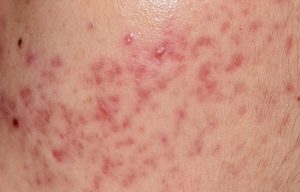
PIH is the flat discoloration — pink, red, brown, or near-black depending on your skin tone — that a pimple leaves after it heals. It is not a scar. It involves no structural damage to the skin. It’s your skin’s inflammatory response producing excess melanin at the site of irritation, leaving a pigmented mark behind.
The key fact about PIH: it will fade on its own. Given enough time — typically 3 to 24 months, depending on depth of pigmentation and sun exposure — most PIH resolves without any treatment at all. The goal of treatment is to accelerate that timeline significantly, not to fix permanent damage.
PIH responds well to: chemical exfoliation, brightening actives (vitamin C, niacinamide, azelaic acid, kojic acid), and — critically — consistent SPF use, since UV exposure dramatically deepens pigmentation and extends its lifespan.
True Acne Scars — The Textural Changes
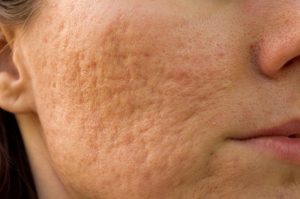
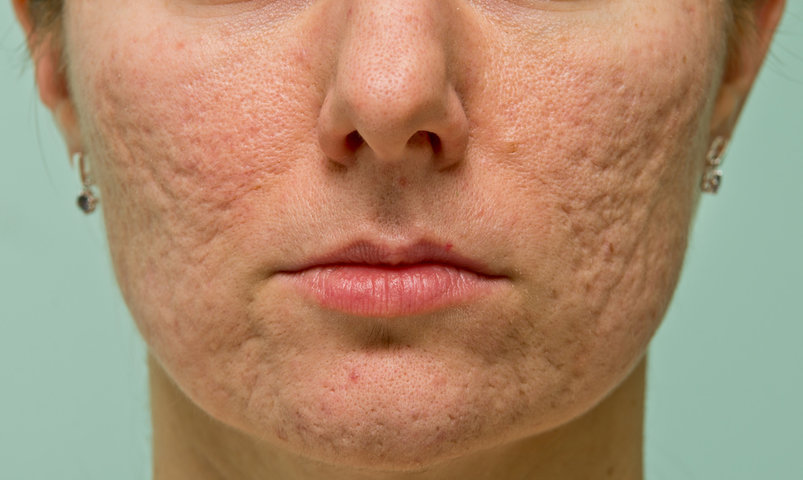
Acne scars involve actual structural damage to the dermis — the deeper layer of skin beneath the surface. They are caused by the inflammatory destruction of collagen during a severe or poorly healed breakout. Unlike PIH, true acne scars do not fade on their own. Without intervention, what you see at 30 is what you’ll see at 60.
There are several types, each with different treatment implications:
Atrophic scars (the most common in acne):
- Ice pick scars — narrow, deep, V-shaped. The hardest to treat because of their depth.
- Boxcar scars — wider, U-shaped depressions with defined edges. More amenable to resurfacing.
- Rolling scars — broad, shallow depressions that create a wave-like uneven texture. Often the most visually significant and among the most treatable.
Hypertrophic and keloid scars — raised rather than indented; more common on the chest and back than the face. Require a different treatment approach entirely.
Knowing which type you’re dealing with — or which combination, because most people have more than one — determines which treatments will actually make a difference.
What Actually Works for PIH (Dark Spots)
The good news: PIH is highly treatable and responds relatively quickly to the right approach.
Chemical Peels. Our corrective chemical peels are one of the most effective professional tools for PIH. Acids like lactic, mandelic, and glycolic accelerate cell turnover and bring fresh, unpigmented skin to the surface faster. A series of appropriately chosen peels — matched to your skin tone and sensitivity — can reduce visible PIH dramatically within 6–8 weeks. For darker skin tones, peel selection is especially important, as certain acids can temporarily worsen pigmentation if chosen incorrectly. This is exactly why professional assessment matters.
Nano Needling. Our nano needling treatments infuse brightening actives — vitamin C, kojic acid, growth factors — deep into the epidermis via micro-channels, bypassing the surface barrier that limits topical product absorption. The result is significantly more effective ingredient delivery than anything you can apply at home, with visible brightening typically apparent after the first session.
HydraGlow / Hydradermabrasion. Our HydraGlow treatments combine exfoliation with targeted serum infusion, consistently improving surface pigmentation while also addressing the texture and congestion that make post-acne skin look uneven. An excellent option for clients who want to address PIH without the more targeted intensity of a chemical peel.
Non-negotiable at home: SPF. We will say this as many times as necessary. UV exposure is the single greatest enemy of post-acne hyperpigmentation. Every minute of unprotected sun exposure on a PIH mark extends its lifespan and deepens its color. A broad-spectrum SPF 30+ worn every morning — rain, fog, or Bay Area overcast — is not optional if you’re trying to fade dark spots.
What Actually Works for True Acne Scars
True acne scars require collagen remodeling — stimulating the skin to rebuild the structural tissue that was destroyed. This takes more time and typically more intensive intervention than PIH treatment.
Chemical Peels for Surface Texture. Medium-depth chemical peels can improve the appearance of shallow boxcar and rolling scars by resurfacing the top layers of skin and stimulating new collagen production. They won’t eliminate deep ice pick scars, but they meaningfully improve the overall texture picture and are often a core part of a longer-term scar treatment plan.
Nano Needling for Collagen Stimulation. Nano needling creates micro-channels in the epidermis that trigger a collagen repair response, while simultaneously infusing skin-repairing peptides and growth factors that support tissue remodeling. For rolling scars and mild boxcar scars, a series of nano needling treatments produces gradual but real textural improvement. It is not the most aggressive scar revision tool available — but it works, it has zero downtime, and it compounds well across sessions.
Combination Approaches. The most effective scar treatment protocols don’t rely on a single modality. Our approach typically involves alternating treatments — a chemical peel one session, nano needling the next, with targeted home care in between — to attack scarring from multiple angles simultaneously. During our Clear Skin Bootcamp or a customized corrective treatment plan, we map out this kind of sequenced approach based on your specific scar types, skin tone, and timeline.
A Realistic Expectation-Setting Moment. Deep ice pick scars and severe atrophic scarring may require more aggressive medical interventions — like subcision, filler, or fractional laser — that go beyond esthetic skincare. We’ll tell you that honestly if it applies to your situation, and we’ll refer you accordingly. What we won’t do is oversell what’s appropriate for your case or talk you into treatments that won’t make a meaningful difference.
The Treatment Order That Actually Makes Sense
One of the most common mistakes we see: people pursuing scar treatment while they still have active acne. This is treating the smoke alarm while the house is still on fire. Active breakouts mean ongoing collagen damage — you’re adding new scars while trying to treat existing ones.
The right sequence is:
- Clear the active acne first. This is where our Clear Skin Bootcamp does the heavy lifting — getting breakouts under control systematically before we focus on what they’ve left behind.
- Address PIH during and after active acne clears. Brightening treatments can begin while acne is being managed, since they don’t conflict.
- Target true scarring once the skin is stable. Collagen remodeling treatments work on a foundation of stable, non-actively-inflamed skin.
Skipping step one creates a frustrating cycle where you’re investing in scar treatment on skin that keeps generating new damage.
Your Home Routine for Post-Acne Skin
Professional treatments create change. Your home routine maintains and accelerates it. For post-acne skin dealing with PIH and texture:
- Niacinamide (4–10%): regulates sebum, reduces inflammation, fades pigmentation
- Azelaic acid (10–20%): targets pigmentation, is safe for sensitive and darker skin tones, gentle enough for daily use
- Vitamin C (L-ascorbic acid, 10–20%): brightens, protects from UV-induced pigmentation worsening, stimulates collagen — use in the morning under SPF
- A gentle retinoid at night: accelerates cell turnover and stimulates collagen; start low (0.025–0.05%), increase slowly
- SPF 30+ every single morning: non-negotiable; every sentence in this post that isn’t about SPF is secondary to this one
Our Semper Amate skincare line includes several of these actives formulated specifically for acne-prone and post-acne skin. If you’re not sure which products map to your specific situation, your consultation is the right place to sort that out — not the skincare aisle at Sephora.
Book Your Acne Scar Consultation in Palo Alto
From Europe With Love is located at 3483 El Camino Real, 2nd floor, Palo Alto, CA 94306. We serve clients from Palo Alto, Menlo Park, Mountain View, Los Altos, Sunnyvale, Cupertino, Redwood City, and across the Peninsula.
Hours: Monday – Tuesday: 3 PM – 7 PM Wednesday – Friday: 11 AM – 7 PM Saturday: 9 AM – 2 PM Sunday: Closed
Book your consultation online → Call: 650-691-5885 Email: [email protected]
The breakout is over. It’s time the reminder of it was too.
From Europe With Love is a premier skin care clinic in Palo Alto, CA, specializing in acne scar treatment, corrective facials, chemical peels, nano needling, and personalized skincare for teens and adults. Founded by Marina, whose European medical background and eight years of Bay Area clinical experience inform every treatment plan we create.
Related Posts