
Back Acne and Chest Acne Are Not Face Acne — Here's Why That Matters …
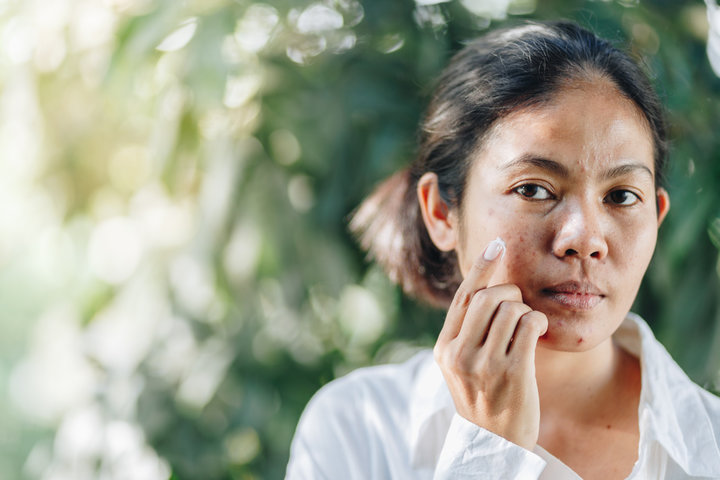
Hormonal Acne in Your 30s, 40s, and 50s
Hormonal Acne in Your 30s, 40s, and 50s: Why It Happens and How to Actually Clear It
You eat well. You drink water. You’ve had a solid skincare routine for years. So why, at 38 or 44 or 51, are you suddenly breaking out like you have something to prove?
Welcome to hormonal acne — one of the most frustrating, least-talked-about skin conditions affecting adult women. It’s not a teenage problem that followed you into adulthood. It’s a distinct condition with its own biology, its own pattern, and its own set of solutions. And the reason so many women spend years fighting it unsuccessfully is simple: they’re treating it like it’s something it’s not.
At From Europe With Love in Palo Alto, hormonal acne in adult women is one of the most common concerns we address. Here’s what’s actually going on — and what genuinely moves the needle.
First: Why Is This Happening Now?
The short answer is that hormones fluctuate throughout a woman’s entire life — not just during puberty. The longer answer involves a few key hormonal dynamics that tend to intensify in your 30s, 40s, and 50s.
Estrogen decline. As women enter perimenopause (which can begin as early as the mid-30s for some), estrogen levels begin to drop. Estrogen has a balancing effect on androgens — the hormones that stimulate sebum production. Less estrogen means androgens like testosterone have a stronger relative effect on the skin, which translates to more oil, more congestion, and more breakouts.
Progesterone fluctuations. Progesterone levels also become less stable across the menstrual cycle as women age. The week or two before your period — when progesterone rises and then drops sharply — is prime time for hormonal breakouts, particularly the deep, cystic kind along the jawline and chin.
Cortisol compounding the problem. Stress hormones and sex hormones share a feedback loop. Chronic stress elevates cortisol, which in turn disrupts hormonal balance and directly stimulates sebaceous glands. For many Bay Area women managing demanding careers, families, and approximately seventeen other responsibilities simultaneously, cortisol is chronically elevated — and the skin pays for it.
The perimenopause and menopause piece. For women in their mid-40s and 50s, the hormonal volatility of perimenopause can trigger acne even in women who never struggled with it before. Skin that behaved perfectly well for three decades suddenly starts breaking out, and the standard explanation — “just use a salicylic acid wash” — offers approximately zero relief because it’s addressing the wrong root cause.
How to Recognize Hormonal Acne
Pattern recognition is your first diagnostic tool. Hormonal acne has a characteristic signature that sets it apart from other types of adult breakouts:
Location. Hormonal breakouts cluster almost exclusively along the lower third of the face — the jawline, chin, and lower cheeks. Occasionally they extend down the neck. If your breakouts consistently follow this geographic pattern, hormones are almost certainly a primary driver.
Timing. If your breakouts flare predictably in the week before your period and improve in the week after, that’s a hormonal cycle pattern. Track it for two or three cycles if you’re not sure — the pattern becomes obvious quickly.
Type. Hormonal acne tends toward deep, painful, cystic lesions rather than the surface-level whiteheads or blackheads of congestion-based acne. These are the breakouts that feel like they’re forming under the skin days before they surface, take forever to resolve, and often leave hyperpigmentation behind when they finally do.
Resistance to standard treatments. If you’ve diligently used benzoyl peroxide, salicylic acid washes, or retinoids with limited success, that’s a telling sign. Those ingredients target bacterial acne and surface congestion effectively — but they don’t address the hormonal sebum overproduction driving the breakout in the first place.
What Doesn’t Work (And Why Women Keep Trying It Anyway)
The skincare market is not set up to distinguish between acne types. Most acne products are formulated for teen acne — bacterial, widespread, surface-level — and marketed broadly. This creates a cycle where adult women with hormonal acne try product after product, get minimal results, and conclude that their skin is simply “difficult.”
It’s not. The products are just wrong for the problem.
Specific things that don’t work well for hormonal acne:
Harsh drying cleansers. Stripping the skin of all its oil triggers a compensatory response — the sebaceous glands produce more sebum to compensate. You dry out, break out more, and damage your skin barrier in the process.
Over-exfoliating. More is not better. Aggressive physical or chemical exfoliation on already-inflamed hormonal acne worsens inflammation and can permanently damage the skin barrier, leading to reactive, sensitized skin that breaks out from almost anything.
Random product stacking. Adding a new serum, switching moisturizers, and trying a new spot treatment simultaneously makes it impossible to know what’s helping, what’s hurting, and what’s doing nothing. It’s also a reliable path to contact dermatitis layered on top of hormonal acne — two problems instead of one.
What Actually Works
Managing hormonal acne requires working at two levels simultaneously: addressing the skin surface with targeted professional treatments, and supporting the internal hormonal environment with the right ingredients and lifestyle adjustments.
Professional Treatments That Target Hormonal Acne
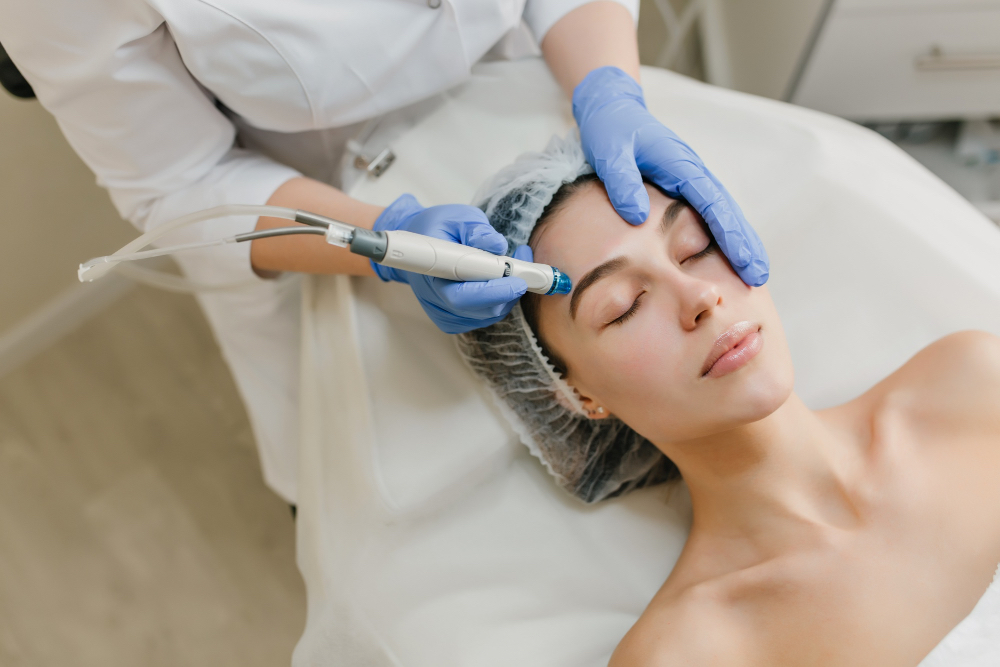
Chemical Peels. Our corrective chemical peels are among the most effective professional tools for hormonal acne. Acids like salicylic (oil-soluble and pore-penetrating), lactic, and mandelic acid accelerate cell turnover, dissolve the congestion that feeds breakouts, and — crucially — address the post-inflammatory hyperpigmentation that hormonal cystic acne leaves behind. A series of correctly chosen peels, spaced appropriately, creates meaningful, visible change in breakout frequency and skin clarity.
Nano Needling. For clients dealing with the scarring and dark marks that persist after hormonal breakouts clear, nano needling is exceptionally effective. The micro-channel infusion method drives brightening and skin-repairing actives deep into the epidermis — far beyond what topical products can achieve on their own. It also doesn’t require downtime, which matters when you can’t take a week off from being a functioning human.
Deep Pore Cleansing Facials. Our deep pore cleansing facials provide professional extractions and targeted treatment for the congestion that builds under the skin between breakout cycles — removing the environment that hormonal sebum overproduction creates before it turns into another painful cystic lesion.
Clear Skin Bootcamp. For women who are done with the trial-and-error cycle and want a structured, expert-guided approach, our Clear Skin Bootcamp is the most comprehensive option. It pairs bi-weekly in-clinic treatments with a personalized at-home protocol designed around your specific hormonal pattern, skin type, and lifestyle. Our 94% success rate is built on this kind of systematic approach — not a single magic product.
The Right At-Home Ingredients
Professional treatments create real change, but your daily routine is what maintains it between sessions. For hormonal acne specifically, these ingredients have the strongest evidence base:
Mandelic acid. A gentler alpha-hydroxy acid that’s oil-soluble enough to work in pores, well-tolerated by sensitive and darker skin tones, and effective for both active breakouts and hyperpigmentation. We carry it in our Semper Amate skincare line specifically because it’s such a reliable performer for adult acne.
SPF — non-negotiably. Hormonal acne leaves hyperpigmentation. Sun exposure makes that hyperpigmentation dramatically worse and permanent. A non-comedogenic SPF 30+ worn daily is not optional if you’re dealing with post-acne dark marks. It’s the single highest-leverage thing you can add to your routine.
Azelaic acid. Anti-inflammatory, antibacterial, and one of the few active ingredients safe during pregnancy and for sensitive skin. Particularly effective at fading the dark marks hormonal breakouts leave behind.
The Lifestyle Factors That Actually Move the Needle
We’re not going to give you a listicle of “drink green tea and sleep more.” But these specific factors have a documented relationship with hormonal acne and are worth addressing seriously:
Blood sugar stability. High-glycemic eating — refined carbs, sugary drinks, white rice, most packaged snack foods — spikes insulin, which drives androgen production, which drives sebum. It’s a direct hormonal pathway. Eating in a way that keeps blood sugar stable (more protein, fiber, healthy fats; fewer refined carbs) genuinely makes a difference for hormonal acne in a way it doesn’t for bacterial acne.
Dairy. Particularly skim milk, which has a well-established association with acne in adult women. The mechanism involves IGF-1 (insulin-like growth factor), which stimulates sebum and skin cell proliferation. Not everyone is affected equally, but if you consume significant amounts of dairy and struggle with persistent hormonal breakouts, a 4-6 week elimination trial is worth running.
Sleep. Seven or more hours isn’t a luxury — it’s when your body regulates cortisol and sex hormones. Consistently sleeping under 7 hours elevates cortisol the next day, which feeds directly back into the hormonal acne cycle.
Managing chronic stress — actually, not performatively. Box breathing, journaling, and meditation apps are fine, but if your cortisol is chronically elevated because your workload and nervous system are chronically overloaded, the real solution involves structural changes, not just stress management techniques layered on top of a fundamentally unsustainable schedule.
A Note on Medical Options
Hormonal acne can also be addressed medically — through a dermatologist or gynecologist — with options like spironolactone (an androgen blocker), certain oral contraceptives formulated to reduce androgenic activity, or hormone replacement therapy discussions for perimenopausal women. These are legitimate tools, and we believe in a collaborative approach. If your hormonal acne is severe or has a clear perimenopausal hormonal driver, a conversation with your physician alongside professional skin care treatment is the most complete path forward.
What we offer is the skin side of that equation — treating what’s happening at the surface level while you address what’s happening internally. The two approaches are not in competition. They work better together.
Ready to Stop Guessing and Start Clearing?
Hormonal acne at 35, 45, or 52 is not something you just have to live with. It has identifiable causes and genuinely effective treatments — they just require the right expertise to apply correctly.
From Europe With Love is located at 3483 El Camino Real, 2nd floor, Palo Alto, CA 94306. We work with clients from across the Peninsula — Palo Alto, Menlo Park, Los Altos, Mountain View, Sunnyvale, Cupertino, Redwood City, and beyond.
Hours: Monday – Tuesday: 3 PM – 7 PM Wednesday – Friday: 11 AM – 7 PM Saturday: 9 AM – 2 PM Sunday: Closed
Book your consultation online → Call: 650-691-5885 Email: [email protected]
Your skin didn’t get the memo that it was supposed to calm down after your teens. Let’s send a correction.
From Europe With Love is a premier skin care clinic in Palo Alto, CA, specializing in adult and hormonal acne treatment, corrective facials, nano needling, and personalized skincare for women at every life stage. Founded by Marina, whose European medical background and eight years of Bay Area clinical experience inform every treatment plan we create.
Related Posts