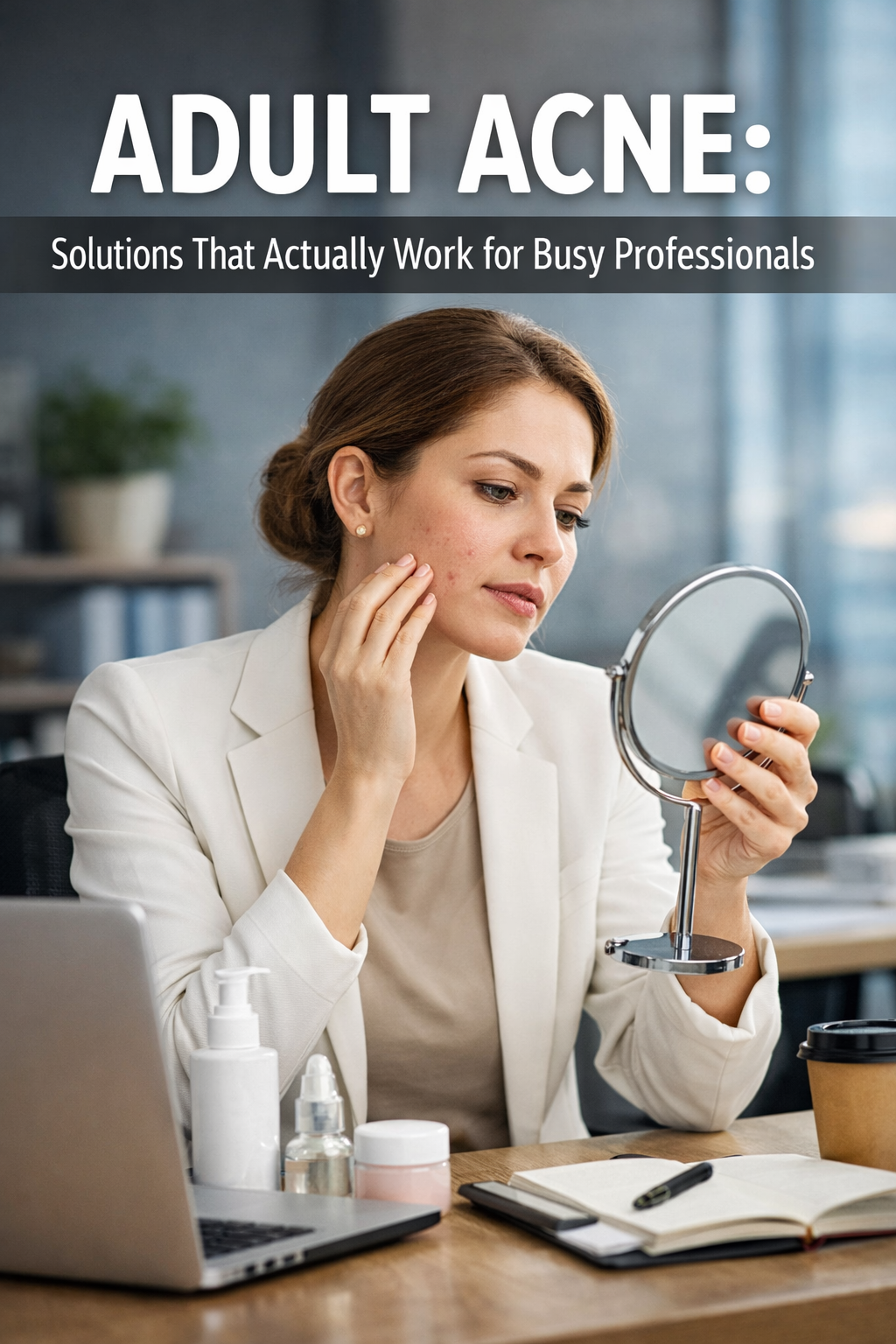

Adult Acne: Solutions That Actually Work for Busy Professionals Acne doesn’t magically disappear after high…
Why Your Acne Routine Isn’t Working
Why Your Acne Routine Isn’t Working (And What to Fix Instead)
If your acne routine isn’t working, the problem usually isn’t that you need stronger products. It’s that your routine is either too aggressive, too inconsistent, or simply not built for your skin type.
This is one of those uncomfortable truths people don’t love hearing: more products does not equal better skin.
In fact, for most acne-prone skin, it’s the opposite.
The Real Reason Your Acne Isn’t Improving
Most failed acne routines come down to one thing: poor strategy, not weak products.
Acne-prone skin needs a routine that supports how the skin actually functions. That means:
- Controlled, consistent exfoliation
- A healthy skin barrier
- Stable hydration levels
When those three things are off, your skin doesn’t “clear faster.” It gets irritated, inflamed, and unpredictable.
Common Mistakes That Ruin Acne Routines
1. Doing Too Much at Once
Layering acids, scrubs, spot treatments, and harsh cleansers might feel productive. It’s not.
It’s just controlled chaos.
Overloading your skin leads to:
- Barrier damage
- Increased oil production
- More breakouts (yes, more)
- Sensitivity and redness
Your skin isn’t stubborn. It’s overwhelmed.
2. Constantly Switching Products
If you change your routine every 2–3 weeks, you’re basically running experiments with no control group.
Skin needs time and consistency to respond. Without that, you’ll never know what’s working.
3. Treating All Acne the Same Way
Not all acne is created equal, but most routines treat it like it is.
- Teen acne ≠ adult acne
- Hormonal acne ≠ inflamed, sensitized skin
- Congestion ≠ barrier damage
Using the wrong approach for your acne type can make things worse, not better.
What Acne-Prone Skin Actually Needs
A good acne routine is usually simpler than people expect. Slightly disappointing, I know.
It should focus on:
- Keeping pores clear (without over-exfoliating)
- Reducing buildup and inflammation
- Supporting the skin barrier
- Maintaining hydration
Here’s the part people skip: barrier health is not optional.
If your skin is constantly dry, tight, or irritated, it won’t respond well to active ingredients. You’ll just end up in a cycle of breakouts and damage.
Why Over-Treating Acne Backfires
Drying out your skin might make a breakout look better for a day or two.
Long term? It usually leads to:
- Increased oil production
- More inflammation
- Slower healing
- Persistent breakouts
Your skin isn’t trying to sabotage you. It’s trying to survive what you’re doing to it.
A Smarter Acne Routine Strategy
Instead of chasing trends or stacking products, focus on a routine that is:
- Consistent (same core routine daily)
- Balanced (treatment + barrier support)
- Targeted (based on your acne type)
In most cases, a routine built on:
- Gentle cleansing
- Controlled exfoliation
- Hydration + barrier repair
will outperform an aggressive, overcomplicated routine every time.
The Bottom Line
Clear skin doesn’t come from doing more.
It comes from doing the right things, consistently.
If your acne routine isn’t working, stop guessing, stop overcorrecting, and stop attacking your skin.
Build a plan that actually supports it.
Because acne isn’t solved with panic.
It’s solved with strategy.
Acne Routine FAQ
How long should an acne routine take to work?
Most acne routines need 6 to 12 weeks to show real, stable improvement.
Skin turnover takes time, and constant changes reset progress. If you’re switching products every few weeks, you’re delaying results without realizing it.
Should I use stronger products if my acne isn’t improving?
Not automatically.
Stronger products often mean more irritation, not better results. If your skin barrier is compromised, even the “best” actives won’t work properly.
Before going stronger, fix:
- Over-exfoliation
- Dehydration
- Inconsistent routine
How do I know if I’m over-exfoliating?
Your skin will tell you. Loudly.
Common signs include:
- Tightness or burning
- Increased redness
- Flaking or peeling
- Breakouts that feel inflamed and persistent
If your skin feels worse instead of gradually improving, you’re likely doing too much.
Can using too many acne products make breakouts worse?
Yes. Constantly.
Layering multiple actives (acids, benzoyl peroxide, scrubs, etc.) can:
- Damage your skin barrier
- Increase oil production
- Trigger more inflammation
More products ≠ better results. It usually means more problems.
What’s the most important step in an acne routine?
Consistency.
You can have a perfect routine on paper, but if you’re not using it consistently, it won’t work.
A simple, well-balanced routine done daily will outperform a complicated routine you can’t stick to.
Do I need to moisturize if I have acne?
Yes. This is not optional.
Skipping moisturizer often leads to:
- Dehydration
- Increased oil production
- More irritation from treatments
Hydrated skin heals better and tolerates acne treatments more effectively.
Why does my acne get worse before it gets better?
Sometimes it doesn’t “get worse.” It just becomes more visible.
Certain active ingredients (like exfoliating acids) can speed up cell turnover, bringing underlying congestion to the surface. This is often called purging.
However, if breakouts are:
- More inflamed
- In new areas
- Paired with irritation
…it’s more likely irritation, not purging.
How do I build the right acne routine for my skin?
Start simple and build intentionally.
A strong foundation includes:
- Gentle cleanser
- Targeted treatment (not five at once)
- Moisturizer
- SPF (non-negotiable)
From there, adjust based on how your skin responds, not trends or hype.
When should I see a professional for acne?
If your acne is:
- Persistent despite consistent care
- Worsening over time
- Leaving marks or scarring
…it’s time to stop guessing.
A customized plan will save you time, money, and a lot of unnecessary skin damage.
Related Posts